

The vagus nerve has become one of the most talked about topics in health and wellbeing. It appears in podcasts, books, scientific journals, and social media, often described as the missing link between stress and our capacity to recover.
But behind the buzzword lies a much more meaningful conversation.
What if many of the challenges we face, such as persistent stress, emotional overwhelm, fatigue, anxiety, or feeling increasingly disconnected from ourselves, are not simply problems to fix, but signs that our nervous system has been working hard to keep us safe?
To explore this, I spoke with Marléne Nunes, whose work over more than four decades has brought together movement, coaching, trauma informed approaches, nervous system regulation, and advanced Life Alignment. Throughout her career, one question has remained constant: what creates lasting change?

Maggie: Why has the vagus nerve become such an important topic?
Marléne: “I think the growing interest reflects a broader shift in how we understand health, stress, and healing.
For many years, the focus was largely on symptoms, diagnosis, or changing behaviour. Today, we are recognising just how profoundly the nervous system shapes our experience of health, emotions, relationships, and daily life.
Over more than forty years of working with people through movement and body based practices, I noticed a consistent pattern. People often left sessions feeling lighter, more settled, and more present. Yet for many, those positive shifts did not always last.
That curiosity led me to explore coaching, Life Alignment, TRE®, Soul Plan, and other integrative approaches. Over time, I realised that movement can create profound shifts, yet something deeper was often asking people to return to familiar patterns.
The growing understanding of the vagus nerve helps explain why. It highlights the central role the nervous system plays in helping us feel safe, engaged with life, and able to recover after challenge. It also gives scientific language to something many holistic practitioners have observed for decades: when the nervous system feels supported, healing often becomes more accessible.”

What exactly is the vagus nerve, and why does it influence so much of how we experience life?
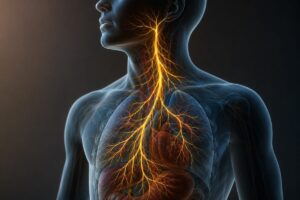
“The vagus nerve is the longest cranial nerve in the body and forms a major part of the autonomic nervous system. It connects the brain with the heart, lungs, digestive system, and many other organs.
Its primary role is supporting the parasympathetic nervous system, often described as our rest, digest, and restore response. While the sympathetic nervous system prepares us for action through fight, flight, freeze, or fawn, the vagus nerve helps slow the heart rate, regulate breathing, support digestion, reduce inflammation, and promote recovery once a challenge has passed.
One of its most remarkable features is that much of the information it carries travels from the body to the brain. In other words, how your body feels continuously shapes how you think, interpret situations, experience emotions, and relate to other people.
A healthy nervous system is not one that stays calm all the time. It is one that can respond appropriately to challenge and then return to balance. The vagus nerve plays a central role in that flexibility.”
Why do so many people struggle to recognise chronic stress?
“One of the greatest challenges with chronic stress is that it gradually becomes normal. People adapt to living in a heightened state of activation and begin believing that constant busyness, overwhelm, or exhaustion is simply how life is.
The signs can include fatigue, disrupted sleep, digestive problems, anxiety, excessive worrying, brain fog, chronic muscle tension, emotional reactivity, difficulty concentrating, or simply feeling disconnected from yourself or others.
Many high performing people do not recognise it because they continue functioning well externally. They appear capable and successful while internally operating from constant pressure.
The body is always communicating with us. Rather than seeing symptoms as evidence that something is wrong, we might begin asking whether they are signs that the nervous system has simply been working too hard for too long.
Fight, flight, freeze, and fawn are remarkable survival responses designed to protect us. Difficulties arise when these protective strategies become our default way of navigating everyday life.”

“Fight may appear as perfectionism or a need to stay in control. Flight often looks like constant busyness, overthinking, or an inability to rest. Freeze can feel like exhaustion, procrastination, or emotional numbness. Fawn may present as people pleasing or difficulty setting healthy boundaries.
When survival becomes the nervous system’s preferred way of relating to life it quietly influences everything: our relationships, creativity, decision making, physical health, and our capacity for joy.
The goal is not to eliminate these responses. It is to restore flexibility, so the nervous system knows when protection is needed and when it is safe to return to connection, curiosity, creativity, and rest.
Understanding the science naturally leads to another question.”

“If the nervous system is continually responding to everything we experience, including our relationships, emotions, beliefs, physical health, environment, and life experiences, can lasting regulation really come from addressing only one of those areas?
For me, this question sits at the heart of Life Alignment.
Understanding the vagus nerve explains how the nervous system functions.
Life Alignment seeks to understand why it may remain in protection.”

Many approaches focus on calming the nervous system. What makes Life Alignment such a comprehensive perspective on healing?
“One of the reasons I value Life Alignment so deeply is that it does not see the nervous system in isolation.
Rather than asking only, ‘How do we regulate the nervous system?’ it asks a broader question: ‘What is continually asking this person’s nervous system to remain in protection?’
Over the years, I have rarely seen stress confined to one area of someone’s life.
Someone may seek support because of anxiety, yet relationship dynamics, unresolved emotional experiences, limiting beliefs, workplace pressures, environmental influences, physical health, and energetic patterns may all be contributing to the same protective response.
A person may seek support because of anxiety, yet what keeps the nervous system in protection is rarely one thing. Unresolved grief, relationship dynamics, workplace pressure, limiting beliefs, environmental influences and physical health may all be quietly contributing to the same response.
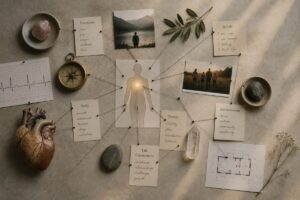
Many approaches offer valuable ways of working with individual parts of this picture. Some focus primarily on physiology, others on psychology, movement, trauma, or energy. Each has value. What makes Life Alignment distinctive is that it offers a structured framework for exploring how these different dimensions interact within the individual both and outer system around them.
One of its unique aspects is the use of muscle testing as a structured method of energetic inquiry. Rather than relying solely on assumptions or conversation, it provides a systematic way of identifying which influences the body indicates are priorities for support, whether physical, emotional, mental, environmental, relational, or energetic.
The balancing process is not simply about managing symptoms. It is about understanding the deeper patterns that may be asking the nervous system to stay in protection and supporting greater coherence across the whole person.
As greater coherence develops across these areas, people often describe feeling calmer, thinking more clearly, and responding to life with greater confidence and perspective.
For me, lasting wellbeing rarely comes from addressing just one aspect of ourselves. It emerges when the different parts of who we are begin working together more coherent
ly.”
Many people understand their patterns intellectually but still struggle to change. Why?
“This is something I see often.
Many people know exactly why they react the way they do. They have spent years in therapy, coaching, or personal development. They understand the story and recognise the pattern.
Yet awareness alone is rarely enough.
Stress responses are not held only in the conscious mind. They are reflected throughout the body and nervous system. If the nervous system continues to perceive danger, it will naturally return to familiar survival strategies regardless of what the mind understands.
More often than not, people are not resisting change. Their nervous system is prioritising protection.
What appears to be self-sabotage is often the body’s intelligent attempt to maintain safety based on previous experiences.
Lasting transformation happens when understanding is accompanied by experiences that help the body rediscover safety. Insight matters, but healing also needs to be embodied.”

What is your understanding of the saying: Beyond regulation: returning to wholeness
“Perhaps the greatest contribution of the vagus nerve is not simply a better understanding of stress, but the reminder that our bodies are constantly responding to the story of our lives.
Rather than asking, What is wrong with me?, we can begin asking:
What has my nervous system been trying to protect me from?
That shift changes everything.
This is where Life Alignment offers a broader perspective. Rather than focusing on symptoms alone, it explores the body, emotions, beliefs, relationships, environment, and energetic awareness within one structured process. The aim is not only to regulate the nervous system, but to understand what may be keeping it in protection and support the whole person in returning to balance.
Healing is rarely about becoming someone different.
More often, it is about restoring coherence to what has always belonged together, allowing us to respond to life with greater clarity, flexibility, and ease.”

Thank you, Marléne, for sharing your wisdom and experience so generously.

VORTEX CARD SET OF THE MONTH
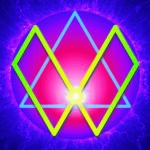

Flow Card Set
This month we’ve explored how lasting healing is about more than calming the nervous system—it’s about restoring coherence throughout the whole person.
The Vortex Flow Card Set supports this by encouraging the harmonious flow of energy between two points. When energy flows freely, communication improves, balance is restored, and wellbeing is naturally supported. Whether used on the body, in the home, or on the land, it serves as a gentle reminder that health flourishes when energy is able to move rather than become stagnant.
In today’s world of increasing electromagnetic exposure, the Flow Card Set also provides valuable energetic support, especially when paired with the Cell Phone Protection Card.
Just as the nervous system thrives when it can move with flexibility and ease, so too does our energetic environment. By promoting greater balance and coherence, the Flow Card Set beautifully complements this month’s invitation to support wellbeing from a whole-person perspective.
Events & More
The Vagus Pathway: Harmony of the Nervous System and Soul
A one-day journey to calm your nervous system and align with your soul.
Discover how to relate more consciously between the sympathetic and parasympathetic states while learning deep insights about yourself.
Experience Life Alignment group balances and the quantum refinement of Vortex technology — a process designed to release stress, clear energy, and reprogram unhealthy defaults into balance and coherence.
You’ll learn:
Simple tools to regulate stress and emotions
How the vagus pathway connects body, heart, and higher guidance
To restore harmony and inner peace
Live on Zoom
Recording available for participants
Open to all – no prior experience needed
11 October 2026 10:00–18:00 SAST ZAR 3750
Did you miss one of our newsletters? Check the history on our Blog!
FREE Chat with Jeff on selected Tuesdays. reach out to Margarete@life-alignment.com with your WhatsApp number to be added to the LA Announcements Group to receive the Zoom-link.
| Programme 2026 |