
There are moments in life when emotions stop feeling like passing experiences we simply need to “manage” and begin asking for something deeper from us.
In a world that constantly encourages people to continue functioning, producing, and moving forward, many people become disconnected from what is happening internally until the body, relationships, or life itself demand attention.
Within the Foundations training in Life Alignment, emotional awareness is explored through four steps:
Feeling
Choosing to Feel
Releasing
Receiving
What initially appears to be a simple emotional process gradually opens a broader conversation about the body, awareness, and transformation.
This month I spoke with Itael Gil Camon, senior teacher and Head of the Curriculum Committee of Life Alignment, about these steps, the deeper role emotions play in our lives, and why learning how to work consciously with emotion can fundamentally change the way people experience themselves and the world around them.

Step One – Feeling
Maggie: Itael, you say that emotions are not interruptions to the process they are often the doorway into it. I love this teaching, please explain what you mean by that?
Over the years, both through teaching and accompanying people in emotional processes, I have seen that many individuals spend years trying to manage emotions without truly listening to what those emotions are attempting to communicate.
Most of us were taught how to continue functioning.
How to stay productive.
How to suppress discomfort and keep moving forward.
But eventually, the emotions we avoid begin speaking through other languages: Stress, exhaustion, anxiety, physical symptoms, and repeating relationship patterns.
And at some point, emotion stops feeling like something temporary we simply need to “fix.” It begins opening a doorway into unresolved patterns and into the relationship between the body and the inner world we often silence beneath daily functioning.
Very often, we ask: “How do I make this feeling disappear?” Yet the deeper question may be: “What is this emotion trying to show me?”
As long as unconscious patterns remain unconscious, they continue shaping our lives automatically. And this is why emotional awareness matters so deeply. Because the moment people begin listening consciously to what they feel, emotions stop being only reactions they need to control. They begin becoming part of a much deeper process of awareness and transformation.
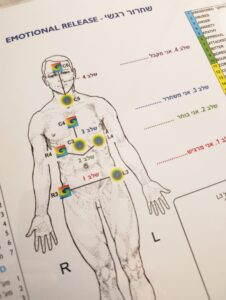
The first step in the foundational process of Life Alignment is “Feeling.” It sounds so natural, yet you often say it is one of the hardest steps for people. Why?
Because truly feeling requires presence.
And presence sounds beautiful conceptually, but in reality, it asks something very confronting from us.
It asks us to pause long enough to notice what is actually happening inside us before we immediately explain it, suppress it, distract ourselves from it, or try to fix it.
In my experience, I often see that many individuals only recognize stress once the body collapses into exhaustion.
They notice sadness only after becoming emotionally numb.
They identify anger only once it erupts.
The body often begins speaking long before the conscious mind is willing to listen.
A person says, “I’m fine,” while their shoulders remain completely contracted. Someone insists they are not angry, yet every interaction carries irritation underneath it.
The emotion itself is usually not the problem.
The disconnection from it is.
Emotional experiences are not stored only as thoughts or memories. Very often they are also held physically through tension patterns, breathing, contraction, posture, vigilance, and internal stress responses.
In many ways, the body remembers what the mind tries to move beyond too quickly. And this is why the first step is not about changing the emotion. It is about becoming willing to meet it.
Because every emotion carries information.
Not only about pain, but about longing.
Not only about discomfort, but about direction.
Sometimes sadness reveals where the heart remained attached.
Sometimes anger reveals where boundaries were crossed.
Sometimes anxiety reveals how disconnected we have become from trust, safety, or inner stability.
And beneath all of this, there is often something deeper trying to emerge. Almost as though emotion itself is part of the soul’s way of guiding human development through lived experience.
Not to punish us. But to awaken awareness.

Step Two – Choosing to Feel
The second step introduces the idea of choice. What does “Choosing to Feel” actually mean?
This step is deeply important because it changes the person from being emotionally reactive into consciously participatory within their own experience.
Most people assume emotions simply happen automatically.
And in many ways, they do.
But choosing to feel is something entirely different.
It is the conscious willingness not to abandon ourselves when emotion arises. We often see how quickly people disconnect when discomfort appears. They become hyperproductive, analytical, distracted, emotionally shut down, or spiritually bypassing.
Not because they are weak, but because vulnerability often feels unsafe.
Many of us learned very early that expressing certain emotions threatened safety, belonging, approval, or connection. Over time, the system adapts by disconnecting from emotion in order to protect itself.
But eventually, disconnection from emotion becomes disconnection from self, and this is where choosing to feel becomes transformative.
Because for perhaps the first time, the individual consciously decides:“I am willing to remain present with myself instead of immediately escaping my experience.”
If I stayed with this experience for a little longer instead of moving away from it, what might I discover about myself?
Life was never only about transcending experience. It was also about inhabiting it fully and feeling it consciously.
Allowing awareness to enter places that previously operated automatically. Over time, this step begins developing entirely new capacities within the individual.
As people stop running automatically from discomfort, they begin developing resilience, self-trust, discernment, emotional flexibility, and compassion not as ideas, but as lived internal capacities.
The simple act of consciously naming and recognizing what we feel already begins creating internal regulation.
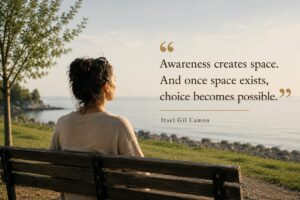
Awareness creates space. And once space exists, choice becomes possible.
Step Three – Releasing
Many people associate release with emotional catharsis. Please explain how you teach the emotional release within the context of Life Alignment and how it seems to approach it differently.
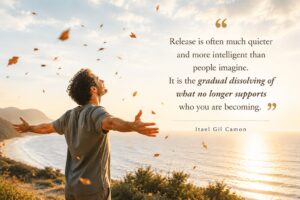
Release is often much quieter and more intelligent than people imagine.
Sometimes it appears as tears, breath, physical relaxation, or insight. Sometimes it is the gradual dissolving of an attachment, belief, identity, or protective pattern that no longer supports growth.
This process is approached multidimensionally, recognizing that emotional stress may be held simultaneously within the emotional, physical, mental, and energetic bodies.
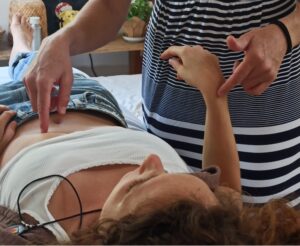
Muscle testing can serve as a valuable form of biofeedback, helping identify areas where conscious understanding and deeper internal responses may not fully align. I have often seen people feel ready to move forward while their system continues responding with stress, fear, or resistance. By bringing these discrepancies into awareness, the system has an opportunity to release patterns that may no longer be necessary.
One of the deepest realizations during this step is that emotions are not permanent identities. They are experiences that move through us, but they do not define who we are.
As people begin to recognize this, something softens. They stop holding every emotional state as absolute truth, allowing qualities such as creativity, intuition, clarity, and connection to emerge more naturally. This often reveals another layer of the process: “What am I still holding onto that may no longer be serving who I am becoming”?
Step Four – Receiving
The fourth step is Receiving. What does Receiving actually mean in this process.
Receiving is our willingness to welcome what becomes possible when we create space for it. It is not about getting something new, It is about allowing more of who we truly are to emerge.
As old beliefs, emotional patterns, and protective responses soften, our perception begins to shift. We begin seeing ourselves, others, and life through a different lens.
The circumstances around us may remain the same, yet our experience of them changes. We respond with greater presence, clarity, and freedom rather than from automatic reactions.
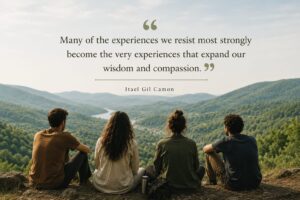
Often, the experiences we once resisted become the very experiences that deepen our compassion, wisdom, and capacity to support others.
This is where emotional work becomes more than releasing the past. It becomes an openness to new possibilities, new choices, and a deeper relationship with ourselves.
Itael, after everything we explored today, what do you feel is the deeper value of learning how to work consciously with emotion?
At a deeper level, emotional work is not only about feeling better.
Nor is it simply about making difficult emotions disappear.
It is about developing a different relationship with ourselves through what we feel. Over time, the question begins to change. Instead of asking: “How do I get rid of this feeling?” ,“How do I fix it?” Or:
“How do I make it go away?” We begin asking: “What is this experience asking me to see, understand, or heal?”
Because healing does not always come from removing the experience. Sometimes it comes from meeting it differently. With greater awareness, greater compassion, and a willingness to remain present with ourselves. In that process, something begins to shift.
Not only within the emotion itself, but within our relationship to who we are. And as that relationship changes, new possibilities begin to emerge, more choice, more freedom, more trust, more capacity to meet life as it is. Perhaps one of the deeper gifts of emotional awareness is that it helps us remain connected to ourselves while moving through life’s challenges. Not because difficulty disappears, but because we are no longer facing it from the same place. And from that place, growth, healing, and transformation can unfold naturally.
Thank you, Itael, for sharing your insights and experience with us today. Your reflections on emotional awareness, presence, and transformation offer a thoughtful perspective on how emotions can become powerful catalysts for growth and self-understanding.
VORTEX CARD OF THE MONTH

Opener Card
(Family & Ancestral Belief Patterns)
The Opener Card is based on the understanding that beliefs and emotional patterns can be passed through family systems from one generation to the next.
It supports the awareness, release, and transformation of limiting family and ancestral beliefs that may influence how we perceive ourselves, respond emotionally, and engage with life.
In emotional work, the card can help bring inherited patterns into consciousness, creating space for greater freedom, choice, and new possibilities.
Placement: Place the card on the forehead while holding the relevant belief pattern in awareness. In a space, place it on the front door (priority door) to support the clearing of inherited family dynamics and belief patterns within the environment.
Events & More
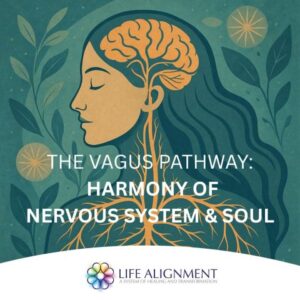
The Vagus Pathway: Harmony of the Nervous System and Soul
A one-day journey to calm your nervous system and align with your soul.
Discover how to relate more consciously between the sympathetic and parasympathetic states while learning deep insights about yourself.
Experience Life Alignment group balances and the quantum refinement of Vortex technology — a process designed to release stress, clear energy, and reprogram unhealthy defaults into balance and coherence.
You’ll learn:
Simple tools to regulate stress and emotions
How the vagus pathway connects body, heart, and higher guidance
To restore harmony and inner peace
Live on Zoom
Recording available for participants
Open to all – no prior experience needed
11 October 2026 10:00–18:00 SAST ZAR 3750
BOOK HERE
Did you miss one of our newsletters? Check the history on our Blog!
FREE Chat with Jeff on selected Tuesdays. reach out to Margarete@life-alignment.com with your WhatsApp number to be added to the LA Announcements Group to receive the Zoom-link.
Programme 2026